
Data Center Energy Consumption: How Much Electricity Does a Data Center Use?
A typical enterprise data center consumes between 1 MW and 10 MW of electricity continuously. Hyperscale facilities operated by companies like AWS, Google, and Microsoft routinely draw 50 MW to 150 MW or more. Annually, a single large data center can consume 500 million to over 1 billion kilowatt-hours (kWh), roughly equivalent to the electricity usage of 50,000 to 100,000 US homes. Electricity typically accounts for 40% to 60% of total data center operating costs, making energy procurement one of the most consequential financial decisions in this industry.
These numbers are climbing fast. The International Energy Agency (IEA) estimates that global data center electricity consumption could reach 945 TWh by 2026, roughly doubling from 2022 levels. The surge is driven by generative AI workloads, large language model training, cloud migration, and the explosive growth of edge computing. NVIDIA's latest GPU clusters for AI training can draw 40 kW to 120 kW per rack, three to six times the density of traditional compute environments. For operators in Texas, where the ERCOT wholesale market creates both opportunity and volatility, understanding energy consumption patterns is essential to maintaining competitive operating margins.
This article breaks down exactly how much electricity data centers use, what drives that consumption, how Power Usage Effectiveness (PUE) benchmarks compare across facility types, and why Texas has become one of the fastest-growing data center markets in North America. If you manage infrastructure, negotiate power contracts, or oversee capital planning for data center operations, this is the reference you need.
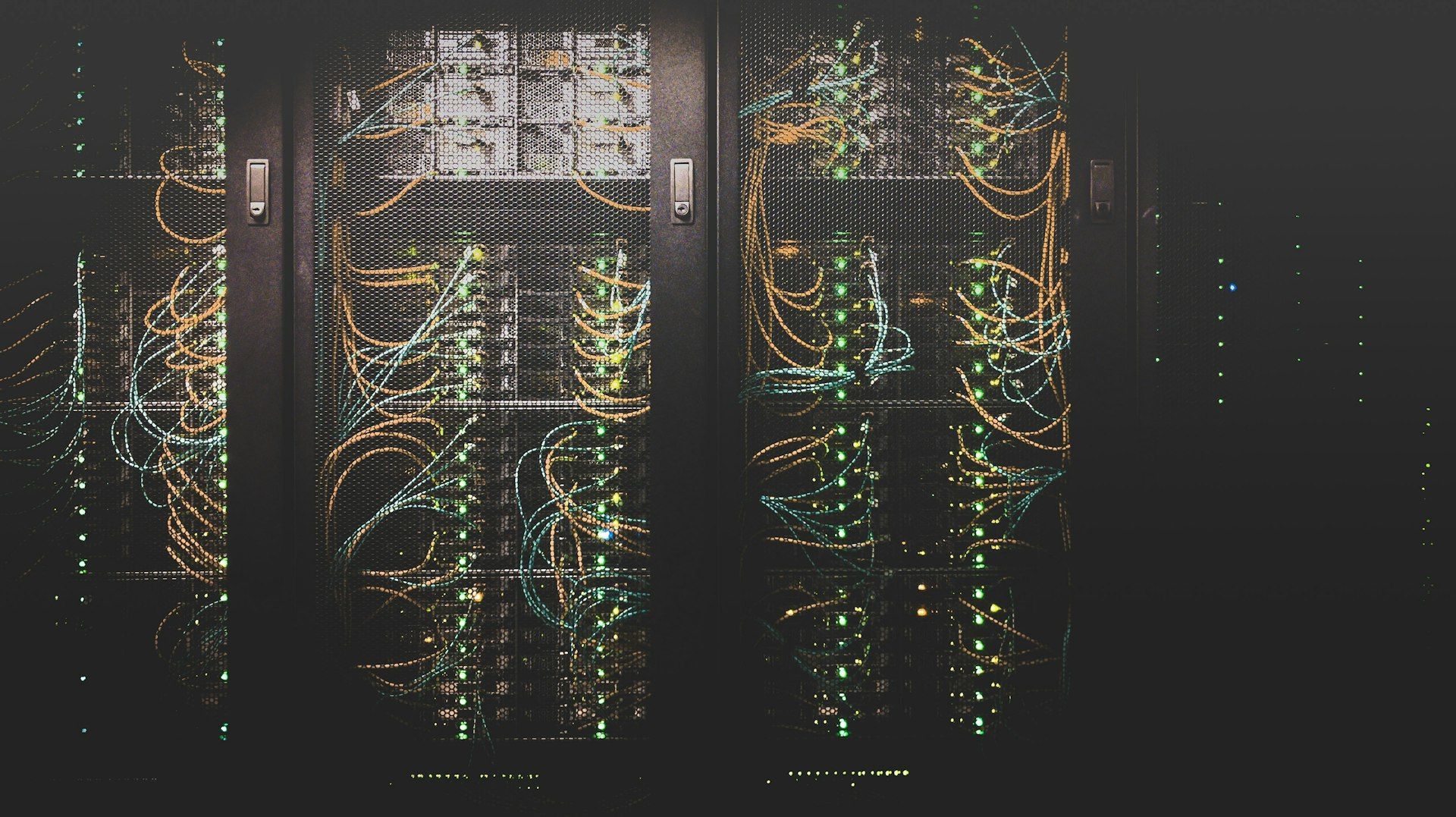
How Much Electricity Does a Data Center Use?
The answer depends entirely on facility class. A 5,000-square-foot server room powering a regional financial services firm bears no resemblance to a 400,000-square-foot hyperscale campus supporting a global cloud platform. Here is how electricity consumption breaks down across the major categories.
Data Center Size vs. Electricity Consumption
| Facility Type | Typical IT Load (MW) | Annual Consumption (kWh) | Equivalent US Homes | Estimated Annual Electricity Cost |
|---|---|---|---|---|
| Small Enterprise / Server Room | 0.1 – 0.5 MW | 876,000 – 4.38M | 80 – 400 | $52K – $263K |
| Mid-Size Enterprise | 0.5 – 3 MW | 4.38M – 26.3M | 400 – 2,400 | $263K – $1.58M |
| Colocation Facility | 3 – 15 MW | 26.3M – 131M | 2,400 – 12,000 | $1.58M – $7.9M |
| Hyperscale Data Center | 15 – 150+ MW | 131M – 1.31B+ | 12,000 – 120,000+ | $7.9M – $79M+ |
| AI/ML Training Cluster | 10 – 100+ MW | 87.6M – 876M+ | 8,000 – 80,000+ | $5.3M – $52.6M+ |
Cost estimates based on an average blended rate of $0.06/kWh, representative of competitive Commercial Electricity Rates within Texas. Actual costs vary significantly based on contract structure, load profile, and market conditions.
Small Enterprise Data Centers
A typical on-premises server room supporting 10 to 50 racks draws 100 kW to 500 kW continuously. These facilities usually run at 3 kW to 7 kW per rack, with modest cooling requirements handled by precision CRAC (Computer Room Air Conditioning) units. Annual electricity consumption falls between 876,000 and 4.38 million kWh. While the absolute numbers seem manageable, PUE values in these environments often exceed 2.0, meaning nearly half the electricity bill pays for cooling and power distribution overhead rather than actual computing.
Colocation Facilities
Colocation providers typically operate facilities between 3 MW and 15 MW of IT load, though major colo operators like Equinix, Digital Realty, and CyrusOne manage campuses well beyond that range. Rack densities in modern colo environments average 8 kW to 15 kW per rack, with high-performance zones reaching 30 kW or more. Annual consumption for a 10 MW colo facility at a PUE of 1.4 comes to approximately 122 million kWh. Electricity is the single largest variable cost, and operators pass much of it through to tenants.
Hyperscale Data Centers
Hyperscale facilities represent the extreme end of the spectrum. Meta's data center in Temple, Texas, occupies over 900,000 square feet. Google's Midlothian campus continues to expand. These facilities typically operate at 50 MW to 150 MW of IT load, with some new builds designed for 300 MW or more. At 100 MW and a PUE of 1.1, a hyperscale data center consumes approximately 964 million kWh annually. At $0.05/kWh, that is a $48 million annual electricity bill before accounting for demand charges, transmission fees, or ancillary services.
AI and Machine Learning Infrastructure
AI training clusters have fundamentally changed data center power requirements. A single NVIDIA DGX H100 system draws approximately 10.2 kW. Scale that to a training cluster of 10,000 GPUs and you're looking at 15 MW to 30 MW of sustained IT load, not including the cooling required to reject that heat. Training a large language model like GPT-4 is estimated to have consumed 50 GWh of electricity over its training period. Inference workloads are less intensive per query but accumulate rapidly at scale: each ChatGPT query consumes roughly 10 times the electricity of a Google search.
AI Infrastructure Power Requirements
| AI Workload Type | Typical Rack Density | Cluster Size (MW) | Cooling Requirement |
|---|---|---|---|
| Traditional Compute | 5 – 8 kW/rack | 0.5 – 5 MW | Air cooling sufficient |
| GPU Training (Mid-Scale) | 30 – 50 kW/rack | 5 – 30 MW | Rear-door or direct liquid cooling |
| GPU Training (Hyperscale) | 50 – 120 kW/rack | 30 – 150+ MW | Direct liquid or immersion cooling required |
| AI Inference (High Volume) | 15 – 40 kW/rack | 5 – 50 MW | Liquid cooling recommended |
| Edge AI / IoT Processing | 5 – 15 kW/rack | 0.1 – 2 MW | Air or hybrid cooling |

Data Center Energy Consumption Breakdown
Not all electricity entering a data center reaches the servers. A significant portion goes to cooling, power conversion, lighting, and auxiliary systems. Understanding where power is consumed is the first step toward reducing it.
Energy Consumption by Component
| Component | % of Total Facility Power | Description |
|---|---|---|
| IT Equipment (Servers, Storage, Network) | 40% – 55% | CPUs, GPUs, RAM, storage drives, switches, routers |
| Cooling Systems | 30% – 40% | CRAC/CRAH units, chillers, cooling towers, liquid cooling loops |
| Power Distribution (UPS, PDUs, Transformers) | 8% – 15% | Uninterruptible power supplies, power distribution units, switchgear |
| Lighting and Security | 1% – 3% | Facility lighting, surveillance, access control systems |
| Backup Systems (Generators, Battery) | 1% – 2% | Diesel generators (standby), battery backup for ride-through |
| Other (Office Space, Networking) | 1% – 3% | Administrative areas, network operations centers |
Base Load Characteristics
Data centers are unique among commercial electricity consumers because they maintain a near-constant base load 24 hours a day, 365 days a year. Unlike manufacturing plants that ramp up and down with production schedules, or office buildings that drop to minimal load overnight, data centers maintain 85% to 95% of peak load around the clock. This load profile creates specific opportunities and challenges for electricity procurement in the ERCOT market, where real-time pricing can swing dramatically between off-peak and on-peak periods.
Cooling Overhead
Cooling is the second-largest energy consumer in virtually every data center. In Texas, where ambient temperatures regularly exceed 100°F (38°C) during summer months, cooling loads spike significantly. A facility that maintains a PUE of 1.3 in January may see that number climb to 1.5 or higher in August if its cooling infrastructure relies heavily on outside air economization. The shift toward liquid cooling and immersion cooling is partially driven by the need to decouple cooling efficiency from ambient climate conditions.
Redundancy Costs
Most enterprise data centers operate at N+1 or 2N redundancy for power infrastructure. A 2N UPS configuration means the facility has twice the UPS capacity it needs for the actual IT load. While only one set of UPS systems actively carries the load at any given time, both systems consume standby power and generate heat that must be cooled. The Uptime Institute estimates that moving from a Tier III (N+1) to a Tier IV (2N) design typically increases facility-level energy consumption by 5% to 10%, independent of the IT load.
PUE Explained: Power Usage Effectiveness for Data Centers
Power Usage Effectiveness (PUE) is the industry-standard metric for measuring data center energy efficiency. Developed by The Green Grid and adopted globally, PUE quantifies how much total facility energy is consumed relative to the energy used by IT equipment alone.
PUE Formula
PUE = Total Facility Energy / IT Equipment Energy
A PUE of 1.0 would mean every watt entering the facility goes directly to computing. That is physically impossible because some energy will always be lost to power conversion, cooling, and distribution. A PUE of 2.0 means the facility uses twice as much total energy as the IT equipment alone, with the other half consumed by overhead systems.
PUE Calculation Example
Consider a data center that draws 12 MW from the utility. Metering shows 8 MW is consumed by IT equipment. PUE = 12 MW / 8 MW = 1.5. This means for every watt delivered to servers, an additional 0.5 watts is consumed by cooling, power distribution, and other overhead. Reducing that PUE from 1.5 to 1.3 on an 8 MW IT load saves 1.6 MW of overhead power, which at $0.06/kWh translates to approximately $840,000 in annual electricity savings.
PUE Benchmarks by Facility Type
| Facility Type | Typical PUE Range | Best-in-Class PUE | Industry Average |
|---|---|---|---|
| Hyperscale (Google, Meta, Microsoft) | 1.08 – 1.20 | 1.06 (Google) | 1.10 |
| Large Colocation | 1.25 – 1.50 | 1.20 | 1.35 |
| Mid-Size Enterprise | 1.40 – 1.80 | 1.30 | 1.55 |
| Small Enterprise / Legacy | 1.80 – 2.50+ | 1.50 | 2.00 |
| Edge Facilities | 1.30 – 1.80 | 1.20 | 1.50 |
Sources: Uptime Institute 2023 Global Data Center Survey; US Department of Energy (DOE) Data Center Optimization Initiative; Google Environmental Reports.
Industry PUE Trends
The Uptime Institute's annual survey shows the global average PUE has stagnated around 1.58 since 2020, down from 2.5 in 2007 but largely flat over the past four years. The gains from basic best practices (hot/cold aisle containment, variable-speed fans, raised set points) have been realized. Further improvements require capital investment in liquid cooling, on-chip cooling, and tighter integration between IT and facilities systems. Hyperscale operators continue to push boundaries because even a 0.01 improvement in PUE at 100 MW scale saves over $500,000 per year in electricity costs.

Factors Affecting Data Center Energy Consumption
Energy consumption in a data center is not fixed. It shifts based on workload, design decisions, geography, and operational choices. Here are the primary variables.
Server Density and Rack Power
Modern 1U servers draw 500W to 1,500W each. A fully populated 42U rack with high-density compute nodes can draw 15 kW to 25 kW. AI-optimized racks with GPU clusters push that to 40 kW, 80 kW, or beyond 100 kW. Higher density means more computing per square foot, but also more heat per square foot, which directly increases cooling energy requirements.
AI and GPU Workloads
A single NVIDIA H100 GPU draws approximately 700W at peak. An 8-GPU server draws 10 kW. A cluster of 1,000 such servers draws 10 MW just for the GPUs, before accounting for CPUs, memory, networking, and storage in the same racks. These workloads are also bursty: a training run may sustain near-peak load for weeks, followed by periods of lighter inference activity. This load variability complicates both cooling design and electricity procurement.
Climate and Cooling Methods
Geography matters. A data center in The Dalles, Oregon, benefits from over 5,000 hours of free cooling annually. A facility in Dallas, Texas, may get fewer than 1,500 hours, depending on humidity tolerances and ASHRAE class ratings. The choice of cooling technology has a direct and measurable impact on energy consumption.
Cooling Technology Comparison
| Cooling Method | Supported Rack Density | Energy Efficiency | Capital Cost | Best For |
|---|---|---|---|---|
| Traditional Air Cooling (CRAC/CRAH) | Up to 10 kW/rack | Moderate (PUE 1.4 – 1.8) | Low | Legacy, low-density environments |
| Hot/Cold Aisle Containment | Up to 15 kW/rack | Good (PUE 1.3 – 1.5) | Low – Moderate | Enterprise, colocation |
| Rear-Door Heat Exchangers | Up to 35 kW/rack | Good (PUE 1.2 – 1.4) | Moderate | Mixed density, retrofit |
| Direct-to-Chip Liquid Cooling | Up to 80 kW/rack | Excellent (PUE 1.1 – 1.25) | High | GPU clusters, HPC, AI training |
| Immersion Cooling | Up to 200+ kW/rack | Excellent (PUE 1.02 – 1.15) | Very High | Extreme density, edge, harsh climates |
Utilization Rates and Virtualization
Many enterprise data centers operate servers at only 12% to 20% average utilization. Each idle server still draws 30% to 60% of its peak power. Virtualization and containerization can consolidate workloads, raising utilization to 60% to 80% and dramatically reducing the total number of physical servers required. The US Department of Energy's Better Buildings initiative estimates that improving average server utilization from 15% to 50% can reduce IT energy consumption by 40% or more.
Power Distribution Efficiency
Every conversion step between the utility meter and the server power supply loses energy. A typical power chain includes: medium-voltage transformer (98% efficient), UPS (92% to 97% efficient), PDU transformer (97% to 99% efficient), and server PSU (90% to 96% efficient). Compounded, these losses mean 10% to 20% of incoming electricity never reaches a processor. High-efficiency UPS systems, 480V or 415V distribution, and eliminating unnecessary transformation steps can recover several percentage points of that loss.
Building Design and Airflow Management
Raised floor vs. overhead distribution, blanking panels, cable management, ceiling height, floor tile placement: these physical design elements directly affect airflow efficiency. Hot air recirculation (where exhaust air bypasses containment and mixes with cold supply air) is one of the most common causes of unnecessary cooling energy consumption. Computational fluid dynamics (CFD) modeling can identify and resolve these inefficiencies, often yielding 10% to 20% cooling energy reductions without hardware changes.
Data Center Energy Consumption Trends
The trajectory of data center electricity consumption is steep and accelerating. Several converging forces are reshaping the energy profile of this sector.
AI and Generative AI Growth
The IEA projects that AI-related electricity demand could grow tenfold between 2023 and 2026. Training large language models, running inference at scale, and supporting real-time AI applications all require GPU-dense infrastructure with power densities far exceeding traditional compute. Goldman Sachs estimates that AI data center power demand could reach 200 TWh annually by 2030 in the US alone, which would represent about 5% of total US electricity consumption.
Edge Computing Expansion
Edge data centers are proliferating to reduce latency for 5G applications, autonomous vehicles, IoT processing, and content delivery. While individually small (50 kW to 2 MW), the aggregate impact of tens of thousands of edge facilities is significant. These facilities often operate in environments without dedicated cooling infrastructure, making energy efficiency especially challenging.
Sustainability Mandates and Renewable PPAs
Major hyperscale operators have committed to 100% renewable energy matching. Google claims 24/7 carbon-free energy at several facilities. Microsoft has pledged to be carbon-negative by 2030. Amazon is the world's largest corporate buyer of renewable energy. These commitments are driving massive investment in wind, solar, and battery storage, particularly in Texas, where ERCOT's renewable interconnection queue exceeds 200 GW. For operators tracking business electricity rates in Texas, renewable Power Purchase Agreements (PPAs) offer both cost predictability and sustainability reporting benefits.
Immersion Cooling Adoption
Immersion cooling vendors like GRC, LiquidCool Solutions, and Submer are seeing accelerated adoption driven by AI rack densities that air cooling simply cannot handle. A facility using single-phase immersion cooling can achieve PUE values below 1.10, even in hot climates like Texas. The technology eliminates fans, reduces HVAC infrastructure, and can enable waste heat recapture for adjacent facilities or district heating systems.
Rack Density Increases
Average rack densities industry-wide have increased from 5 kW per rack in 2015 to approximately 8.4 kW in 2023, according to the Uptime Institute. AI-driven facilities are deploying at 40 kW to 100+ kW per rack. This compression means fewer racks delivering more compute, but each rack requires exponentially more power and cooling capacity. The infrastructure implications are enormous: electrical switchgear, bus duct, and distribution systems designed for 10 kW/rack environments cannot support 50 kW/rack loads without wholesale replacement.
Grid Impact and Utility Challenges
Data centers are straining electrical grids in key markets. In Northern Virginia, Dominion Energy has warned of multi-year delays in connecting new data center loads. In Ireland, EirGrid placed a moratorium on new data center grid connections in certain zones. Texas faces similar pressure points, particularly along the I-35 corridor and in West Texas, where transmission capacity was built for wind generation export, not for serving large new loads. ERCOT's long-term forecasts now account for data center load growth as a primary driver of peak demand increases.
Texas as a Data Center Market
Texas has emerged as one of the top three data center markets in the United States, alongside Northern Virginia and the greater Phoenix metro area. The reasons are structural, and they go well beyond cheap land.
ERCOT Wholesale Market Access
Texas operates its own independent grid through the Electric Reliability Council of Texas (ERCOT), which manages a deregulated wholesale electricity market. Unlike vertically integrated utility markets where rates are set by commissions, ERCOT's competitive market allows large consumers to procure electricity through bilateral contracts, wholesale indexed products, and block-and-index structures. Data center operators with sophisticated load profiles can access large commercial energy rates that are significantly below national averages. Partnering with Texas Electric Broker provides access to competitive wholesale electricity rates, demand response programs, and renewable PPAs tailored to your data center’s specific load profile.
Deregulated Market Advantages
In a deregulated market, data center operators are not captive to a single utility. They can negotiate directly with Retail Electric Providers (REPs), lock in long-term fixed rates to hedge against volatility, layer in renewable energy credits, and structure contracts around their specific load shape. This flexibility is particularly valuable for facilities with predictable base loads, where procurement strategy can reduce blended electricity costs by 15% to 30% compared to default commercial tariffs. The best commercial energy rates in Texas are not published on provider websites; they require competitive bidding and expert negotiation.
Renewable Energy Availability
Texas leads the nation in wind generation capacity (over 40 GW installed) and is rapidly scaling solar capacity (over 20 GW installed and growing). ERCOT's renewable interconnection queue contains more than 200 GW of proposed wind, solar, and storage projects. For data center operators pursuing sustainability goals or corporate renewable commitments, Texas offers the most liquid market for renewable PPAs in the country. Physical proximity to generation assets also reduces transmission congestion and basis risk.
Infrastructure and Business Environment
Texas offers no state income tax, robust fiber connectivity along major corridors (Dallas-Fort Worth, San Antonio, Austin, Houston), available land with favorable zoning, and a pro-business regulatory environment. The Texas Enterprise Fund and local economic development agreements provide additional financial incentives for large data center developments. These factors have attracted investments from Meta, Google, Oracle, Tesla, and numerous colocation operators in the data center sector.
Climate Considerations and Grid Resilience
Texas is not without challenges. Summer temperatures routinely exceed 100°F, increasing cooling energy requirements. The February 2021 Winter Storm Uri exposed vulnerabilities in the ERCOT grid, leading to widespread outages and price spikes exceeding $9,000/MWh. Since then, ERCOT and the Texas Legislature have implemented weatherization requirements, a Performance Credit Mechanism, and enhanced ancillary service markets to improve reliability. Data center operators must build resilience into both their physical infrastructure (on-site generation, extended battery runtime, fuel contracts) and their energy procurement strategy (hedging, price caps, curtailment provisions).
Despite these risks, the overall economics remain compelling. Commercial Electricity Rates Texas operators pay are among the most competitive in the nation, especially for large, predictable loads that can be bid competitively in the wholesale market.
How to Reduce Data Center Energy Costs in Texas
Managing data center energy costs in Texas requires a dual approach: reduce consumption through operational efficiency and reduce unit cost through smart procurement. Here are the most impactful strategies.
1. Optimize Electricity Procurement
The single most impactful cost lever for a Texas data center is the electricity contract. A 1 MW facility that saves $0.005/kWh through better procurement saves over $43,000 per year. At 50 MW, that same improvement saves $2.19 million annually. Key procurement strategies include:
- Reverse auctions: Force REPs to compete against each other for your load, driving rates down.
- Block-and-index structures: Lock in a fixed rate for base load and ride the wholesale market for incremental load, capturing upside during low-price periods.
- Contract term optimization: Long-term fixed contracts (3 to 7 years) provide cost certainty but may miss market dips. Blended approaches balance stability with opportunity.
- Load factor alignment: Data centers with high load factors (90%+) are the most attractive customers for REPs. Leverage this to negotiate below-market rates.
Texas Electric Broker specializes in energy procurement for data centers, using competitive bidding and wholesale market access to secure rates that standard retail channels cannot match. Whether you're evaluating the business electricity rates in Texas or negotiating a multi-year contract for a hyperscale campus, an experienced broker adds measurable value.
2. Implement Demand Response Programs
ERCOT offers demand response programs that compensate large consumers for reducing load during grid emergencies or peak demand events. Data centers with redundant capacity or the ability to shift non-critical workloads can earn $50,000 to $500,000+ annually in demand response payments, effectively reducing their net electricity cost. Emergency Response Service (ERS) and ERCOT's new ancillary service products provide structured participation paths.
3. Deploy On-Site Battery Storage
Battery energy storage systems (BESS) allow data centers to charge during low-price periods (typically overnight or during high wind/solar generation) and discharge during peak pricing windows. A 10 MWh battery system cycling daily can capture $0.02 to $0.05/kWh in arbitrage value, generating $200,000 to $500,000 in annual savings while also providing backup power capability. The economics are increasingly favorable as lithium-ion prices continue to decline.
4. Integrate Renewable Energy
Renewable PPAs in ERCOT can provide electricity at $0.025 to $0.04/kWh for long-term contracts (10 to 20 years), well below current wholesale averages. Combining a renewable PPA with a battery storage system and supplemental grid power creates a "green baseload" strategy that delivers both cost savings and carbon reduction. The renewable energy certificates (RECs) generated also support ESG reporting requirements increasingly demanded by enterprise customers and investors.
5. Improve Cooling Efficiency
- Raise server inlet temperatures to the upper range of ASHRAE A1 guidelines (80.6°F / 27°C). Each degree of increase reduces cooling energy by approximately 2% to 4%.
- Implement hot/cold aisle containment if not already in place. This single change typically reduces cooling energy by 15% to 25%.
- Retrofit to variable-speed fans and pumps. Constant-speed CRAC units waste enormous energy at partial loads.
- Evaluate direct liquid cooling for new high-density deployments. The capital premium is typically recovered within 18 to 30 months through energy savings.
6. Increase Server Utilization
Consolidate workloads through virtualization and containerization. Decommission zombie servers (the Uptime Institute estimates 20% to 30% of data center servers are "comatose," drawing power but performing no useful work). Implement dynamic power management to scale CPU frequency and voltage based on actual workload demand. These measures reduce IT load directly, which cascades into cooling savings as well.
7. Monitor and Reduce PUE Continuously
Install granular power monitoring at every level: utility meter, UPS output, PDU level, and rack level. Track PUE in real time, not as a monthly average. The DOE's Data Center Optimization Initiative provides benchmarking tools and best practices specifically designed for improving PUE. A sustained focus on PUE reduction from 1.5 to 1.3 on a 10 MW IT load saves approximately $1.05 million annually at $0.06/kWh.
For operators managing Commercial Electricity Rates within Dallas, Houston, or other major Texas metros, combining procurement optimization with operational efficiency improvements can reduce total energy costs by 20% to 40%. The key is treating energy as a strategic input, not just an overhead line item. Texas Electric Broker's industry-specific expertise helps data center operators approach energy procurement with the same rigor they apply to IT infrastructure.

Frequently Asked Questions
How much electricity does a data center use per year?
A mid-size enterprise data center (1 to 5 MW) typically consumes 8.7 million to 43.8 million kWh per year. Hyperscale data centers (50 MW to 150+ MW) consume 438 million to over 1.3 billion kWh annually. The exact amount depends on IT load, PUE, cooling efficiency, and operational hours.
What is PUE, and what is a good PUE for a data center?
PUE (Power Usage Effectiveness) measures total facility energy divided by IT equipment energy. A PUE of 1.0 is theoretically perfect. The industry average is approximately 1.58 according to the Uptime Institute. Hyperscale operators achieve 1.08 to 1.20. A PUE below 1.4 is considered good for enterprise facilities.
How much electricity does a hyperscale data center consume?
A hyperscale data center operating at 100 MW with a PUE of 1.1 consumes approximately 964 million kWh per year. This is equivalent to the annual electricity usage of roughly 88,000 average US households. Annual electricity costs for such a facility range from $48 million to $96 million, depending on the blended rate.
How much power does AI training require?
Training a large language model can consume 50 GWh or more over the training period. A 10,000-GPU training cluster may draw 15 to 30 MW continuously for weeks or months. Individual AI inference queries consume approximately 10 times the electricity of a traditional web search, and this adds up significantly at scale.
Why is Texas a good location for data centers?
Texas offers ERCOT wholesale electricity market access, a deregulated energy market enabling competitive procurement, abundant renewable energy resources (40+ GW wind, 20+ GW solar), no state income tax, available land, strong fiber connectivity, and a business-friendly regulatory environment. These factors have made Texas one of the top three U.S. data center markets.
What are typical commercial electricity rates for data centers in Texas?
Large data center operators in Texas can access blended electricity rates between $0.04 and $0.07 per kWh through competitive wholesale procurement, depending on contract structure, term length, and load profile. These rates are significantly below the national commercial average of approximately $0.13/kWh. Working with an energy broker provides access to wholesale pricing not available through standard retail channels.
How can data centers reduce cooling energy costs?
Key strategies include raising server inlet temperatures within ASHRAE guidelines, implementing hot/cold aisle containment, switching to variable-speed fans and pumps, deploying direct liquid cooling for high-density racks, and considering immersion cooling for AI workloads. In hot climates like Texas, transitioning away from air cooling can reduce cooling energy consumption by 30% to 50%.
What is the difference between air cooling and liquid cooling for data centers?
Air cooling uses CRAC/CRAH units and fans to move cold air through the data hall, supporting rack densities up to approximately 10 to 15 kW. Liquid cooling circulates coolant directly to heat sources (CPUs, GPUs) or immerses entire servers in dielectric fluid, supporting densities of 80 kW to 200+ kW per rack. Liquid cooling is significantly more energy efficient, achieving PUE improvements of 0.1 to 0.3 compared to air-cooled equivalents.
How does ERCOT's deregulated market benefit data center operators?
ERCOT's deregulated market allows data center operators to choose their electricity provider, negotiate custom contract structures, access wholesale pricing, participate in demand response programs, and structure renewable energy purchases. Large, predictable loads like data centers are highly attractive to Retail Electric Providers, giving operators significant negotiating leverage for below-market rates.
What impact will AI have on data center energy consumption?
The IEA projects that AI-related electricity demand could increase tenfold between 2023 and 2026. Goldman Sachs estimates AI data center power demand in the U.S. could reach 200 TWh annually by 2030. This growth is driving higher rack densities, new cooling technologies, massive grid infrastructure investments, and a fundamental rethinking of how data centers procure and manage electricity.